
About Me
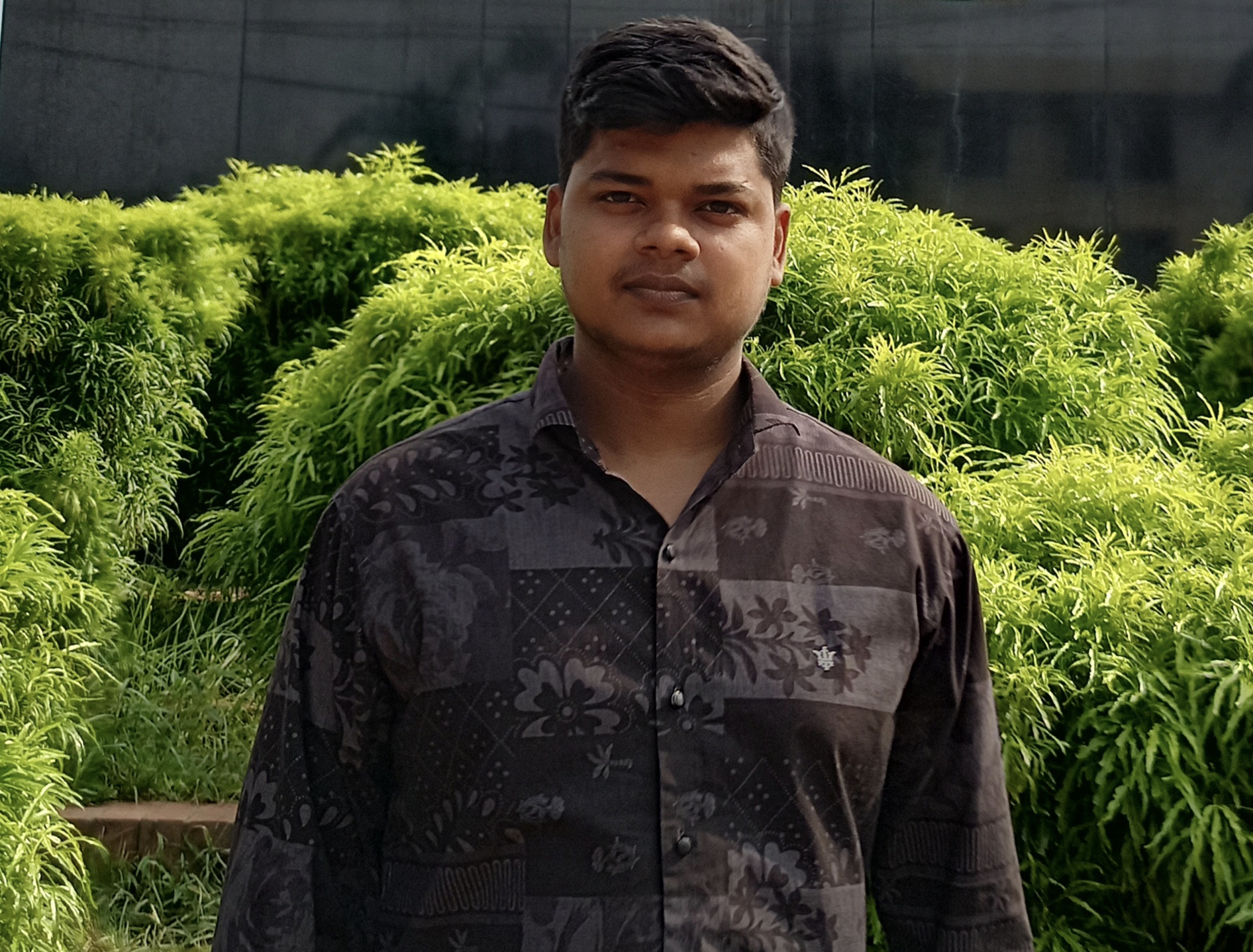
Hello! I am Muhammad Abdul Mannan, an academic researcher specializing in data management, data analysis, and precision agriculture. With a Bachelor of Science in Agriculture and an MS in Agronomy from Sher-e-Bangla Agricultural University, Bangladesh, I have built a strong foundation in agricultural sciences.
Currently, I serve as a lecturer in the Department of Agronomy at EXIM Bank Agricultural University Bangladesh. In this role, I combine teaching responsibilities with active research, focusing on precision agriculture. My particular interest lies in developing programming solutions to advance agricultural practices and efficiency.
I am now seeking a PhD opportunity in Smart Agriculture to further enhance my understanding of precision agriculture and advance my research career in this rapidly evolving field.
Skills
Data Management
Expertise in managing and organizing agricultural data (SQL and CQL)
Data Analysis (Python)
Advanced data analysis using Python and statistical methods
Programming
Python, PHP, JavaScript, and Neo4J
Machine Learning
ML implementation using Python and PHP-ML
Image Processing
OpenCV, Canny Edge Detection, Binary Thresholding, NDVI
Precision Agriculture
Modern agricultural techniques and crop modeling (Precision Irrigation Management)
Theses Supervised
Modeling Weather and Pest-disease interactions
Modeling Synergistic Effects of Weather Variables on Pest and Disease Incidence in Maize. [Grey Leaf Spot Classification Report]
Key Findings:
- High classification accuracy of 86% for disease prediction
- Strong precision (0.89) and recall (0.93) for positive cases
- Weighted average F1-score of 0.85 across all classes
Dynamic Cropping Trend Visualization
Advanced software development for agricultural trend analysis.
Key Findings:
- High model accuracy with R² value of 0.905 and adjusted R² of 0.893
- Climate adaptation (0.288) and technology adoption (0.253) showed strongest positive influences
- Environmental impact (0.192) and varieties (0.150) demonstrated significant contributions
Impact of Roadside Dust on Growth
Study on tomato plant growth and development under varying dust concentrations.
Key Findings:
- Significant decrease in plant height, leaf area, and biomass with increasing dust concentration
- Negative impact on cellular characteristics including guard cells and epidermal cells
- Root and shoot biomass showed declining trends with higher dust exposure
Publications
Building A Dynamic Cropping Trend Visualization Software To Assess Farming Progressiveness
Turkish Journal of Computer and Mathematics Education (TURCOMAT)
View PublicationImpact of Roadside Dust on Growth, Development and Cellular Characteristics of Tomato Plants
International Journal of Scientific Research and Management (IJSRM)
View PublicationInfluence of Planting Geometry on Growth, Phenology, and Yield of White Maize in Padma-Washed Lands
International Journal of Environment and Climate Change
View PublicationInfluence of weeding on the performance of white maize varieties
American Journal of Plant Sciences
View PublicationPerformance of white maize under different spacing and integrated fertilizer management
Agricultural Research & Technology: Open Access Journal
View PublicationVarietal performances of white maize as influenced by different weed management practices
Journal of Experimental Biosciences
View PublicationPerformance of two exotic white maize hybrids as influenced by varying soil moisture regimes during seedling transplantation
Journal of Experimental Biosciences
View PublicationOn Going Researches
Modeling image processing-based abnormal leaf identification in maize
Objective:
To develop an image processing model for the rapid identification of abnormal leaf patterns in maize to aid in early disease detection and management.
Methodology:
1. Collect maize leaf images under varying conditions.
2. Preprocess images to enhance quality and remove noise.
3. Apply machine learning algorithms (e.g., Random Forest, CNN) to classify leaf abnormalities.
4. Validate the model's accuracy using real-world datasets.
Expected Outcomes:
1. High-accuracy detection of leaf abnormalities.
2. A user-friendly tool for farmers and researchers.
3. Improved maize health monitoring and yield prediction.
Research Team:
 Muhammad Abdul Mannan
 Md Najmul Islam Prohor
 Suriaya Yesmin
Impact of Organic Plant Growth Regulators on Shelf-Life in Microgreen Cultivation Techniques
Objective :
1. To determine the effects of plant growth regulators on the plant growth, harvesting time and yield of microgreen.
2. To evaluate the shelf life of microgreens cultivated under different techniques.
3. To identify cost-effective methods for maximizing microgreens' shelf life and quality.
4. To analyze consumer preferences based on shelf life, freshness, and production methods.
Expected Outcome :
1. Application of PGRs increases plant growth and reduces harvesting time.
2. Cocopeat as a growth medium helps to achieve desirable size and yield in a short time.
3. The hydroponic system helps deliver microgreens to consumers in the freshest condition.
Research Team:
 Abu Saleh Md. Tohidul IslamMuhammad Abdul Mannan
 Md.Taijul Islam
  Md. MASUM REZA
 Md. SAMSUL ALAM MANIK
 Asifa Khatun
Shelf Life and Regrowth Performance of Microgreens Under Varying Growth Media
Objectives of the Research:
1.Evaluate the shelf life of microgreens grown in various growth media.
2.Compare regrowth performance of microgreens after harvesting in different media.
3.Identify the optimal growth medium for maximizing shelf life and regrowth.
4.Assess consumer perceptions of microgreens grown in different media.
Expected outcome of the Research :
1.Impact of different growth media of shelf life.
2.Regrowth performance into different media.
3.Identification of the most effective growth medium for extending shelf life and maximizing regrowth potential, based on experimental results.
4.Results from sensory evaluations that provide consumer feedback on the freshness, taste, and overall appeal of microgreens grown in different media.
5.Best Practical recommendations for home gardeners and commercial producers on choosing growth media.
Research Team:
 MD.SIYAM ALI
 Apel mahamud
 Israt Jhahan lima
  Nimme akter nazmin
 Mst.Amena Khatun
Enhancing agricultural practices through digital image processing
Objectives:
1. Monitoring the health of crops and detecting the bounds such as pests, pathogens, and diseases.
2. For efficient use of resources, improving the precision agriculture.
3. Enable the early detection of plant stress, and action can be taken timely.
Expected Outcomes:
1. Increase the yields as well as improve its quality.
2 . Reduce the farming waste and costs.
3 . Agricultural practices will be sustainable and eco-friendly.
Research Team:
 Md. Abir Hossain
  Tanvir Ahmed
Are you a researcher? Register to add your research project.